In our Solar PV system we opted for the GivEnergy battery. Details can be found on the Midsummer Wholesale page.
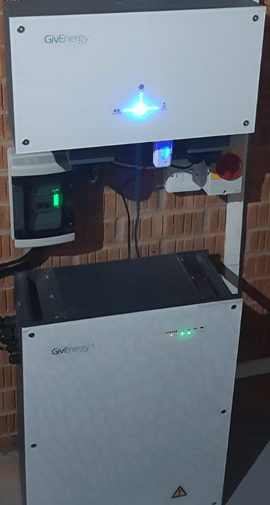
The GivEnergy battery comes in 2 sizes, the 2.6kWh and 8.2kWh but each of these size can be modularised i.e. you can buy 2 or 3 additional batteries of the same size to expand your storage. With a hybrid inverter you can charge and discharge the battery at rates up to 3kW. Interestingly, we recently learnt that the 8.2kWh battery itself can discharge at 4kW but the 3kW inverter is obviously the limiter to this (we wonder why they don’t have a 4kW inverter to match?). To get around this you could get a second inverter to operate in parallel but I’m not sure this would be cost effective for domestic users (aprox. £850 a pop). To be balanced, this AC coupled hybrid inverter is really good though and the monitoring system is superior to some other market standard offering (Solis for example!). For comparison the Tesla Powerwall can charge and discharge at 5kW which means less faffing and arguing about why ‘someone’ switched on the washing machine whilst the oven was still on! Alas with 3kW you’ll have to watch what your family plugs in at the same time like a hawk!
This battery sets itself apart from (most) other batteries available in UK for the domestic storage market by being a LiFePO4 (Lithium Iron Phosphate to you and me!), which means it is fully recyclable at the end of life. Most other battery systems are Lithium-ion (how confusing right Iron and ion!) but this is important because the two technologies are different. The biggest differences for a potential end user like you and me:
- Lithium Iron Phosphate (LiFePO4, e.g. GivEnergy) is better for safety because they don’t over heat and offer some resistance to fire.
- LiFePO4 is fully recyclable at the end of life (because the cathode material is not hazardous) but this is not true for the Lithium-ion.
- The GivEnergy LiFePO4 have higher capacity and higher density cells, put simply more energy in a small footprint.
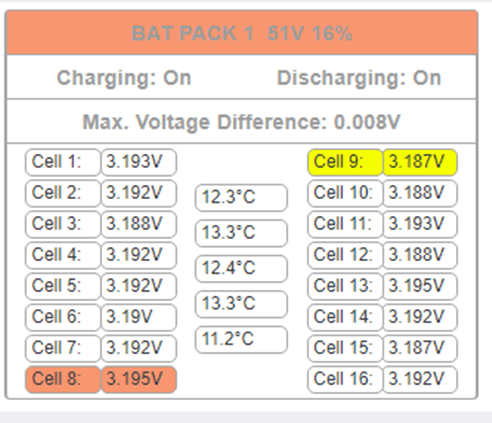
- The GivEnergy system monitors individual cell voltage which means better understanding of system performance.
- Lithium-ion (E.g. EV batteries or Tesla battery) is good for power. This make sense when you then see that for cars which need to accelerate (release energy very quickly) the solution is predominantly the Lithium-ion but for energy consumption within the home we don’t (usually!) need to release as much energy in one go and so the more important attribute is the how much energy the battery can actually store. Hopefully you get the picture that you are often trading off between these two main characteristics (but there are others!)…
End user experience
Our battery is an 8.2kWh unit but if you look closely you’ll note that the depth of discharge(DOD) is 80%, this means that in practice the usable capacity of the battery is actually 6.56kWh (80% of 8.2kWh). This applies to all batteries, there is the overall capacity but you’ll need to understand how much of that is usable to you. The problem we found was the information on usable capacity was not always as prominent as it could be (in fact it is missing from most sales literature!) but fortunately for us, we were looking for it.
- Triple Power 9kWh – DOD is 90% therefore usable capacity = 8.1kWh
- Pylon 2.4kWh – DOD is 90% therefore usable capacity = 2.16kWh (battery can be modularised)
- Tesla Powerwall2 13.5kWh – DOD is 100% therefore full capacity is usable (it appears from various sources that the actual capacity is 14kWh with 96% DOD). As an end user this is a preferable way to receive information i.e. the capacity on the package is real and attainable (Unlike the GivEnergy approach which shows you only the higher unattainable number on the package).
Even with the criticisms of the marketing, the GivEnergy battery is not to be dismissed, the value for 6.56kWh of storage, end of life disposal (fully recyclable) and intuitive monitoring platform.
Monitoring platform
The monitoring page looks very good and is set out very clearly we feel this was thought out well. See images below of the interface, you can also access and play around this yourself via their demo site.
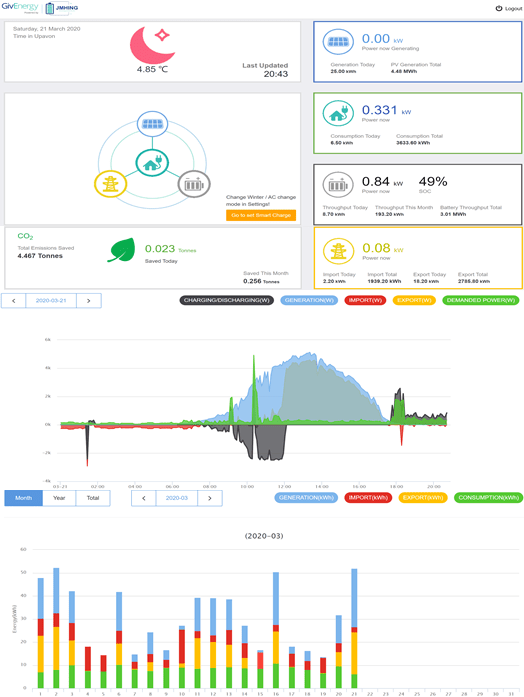
You can see access an interactive demo site of the above on the GivEnergy demo site.
Their mobile phone platform however leaves a lot to be desired, as far as we could see there is nothing available for android and but there is an app for apple. Other than the 4 keys stats, we don’t think app on the IOS system was much use (and we don’t really use it as a result). Information on the app is not displayed clearly the graphs and charts are unreadable…oh dear!
Control systems
The GivEnergy battery system has 4 modes of operation to choose from:
- Default Mode 1 – According to the control system notes, this mode charges the battery with solar during the day and discharges in the evening (What time is evening?? surely this is something that ought to be made clear!) . This mode does not allow overnight charging from the grid.
- Default Mode 2 – According to the control system notes, this mode charges the battery with solar during the day and if the home load exceeds the solar generation, the system will automatically discharge from the battery with the aim of using the grid as last resort. (Why not call this Grid Minimisation, I just thought of that!) . This mode does not allow overnight charging from the grid.
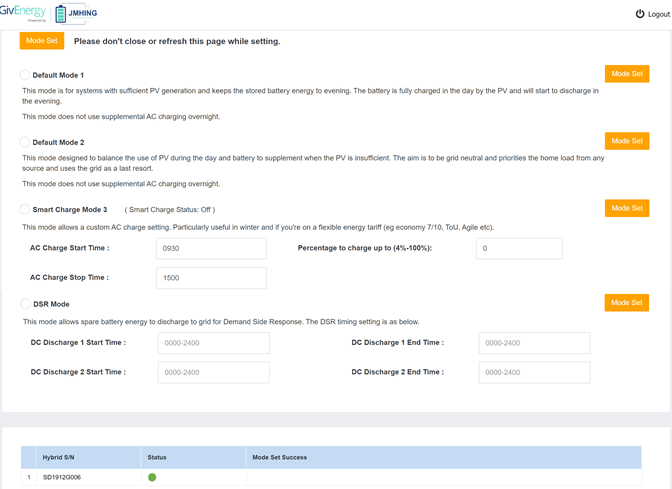
- Smart Charge Mode 3 – We use this with our Octopus Go tariff by setting a start and stop time for charging the battery overnight when the electricity tariff is £0.05 per kWh. At the same time we set a charge limit of 20% so that we have some low cost energy to use in the morning but also have spare battery capacity of 80% to be charged by solar during the day. (in practice we not convinced that the ‘%age charge up to’ has actually been used in the control system, instead we have just calculated start and stop time to give us charge we need assuming charge at 3kW rate). After some trial and error testing we managed to establish that in this mode the system also function as per Mode 2 (i.e. Mode 3 is an enhancement of Mode 2 but why doesn’t the description or manuals make that clear)
- DSR Mode – Demand Side Response. This give two sets of Discharge start and stop times. We haven’t used this but would hope to should we ever move onto suitable electricity tariff, we couldn’t help but wonder though why this mode couldn’t be combined with the features of Smart Charge Mode 3? Genuinely please let us know if you know a reason why, otherwise we will continue to feel this is an oversight. (read about Demand Side Response on the OV Energy Website)
Whilst there is a blurb describing each of the modes, it is not exactly clear or intuitive. Why call anything default mode? …give it a descriptive name and then state that it is the default setting if you must. How can we have 2 default modes? it all probably means something to the techy developers but not so good for a product going into the domestic market where users will have all ranges of technical ability (including very low, like us!!). The battery package comes with a very small manual with details of what each of these modes do however it doesn’t match what is on the ‘Mode Set’ page (shown below) and yes this leaves you as an end-user somewhat confused as to what you should do to operate this. Therefore this lack of clear operating instructions is a concern, and if as a potential user you wanted a specific function or functionality available to you then we would suggest that you write down your requirements and ask your installer to specifically confirm that the system can do this before you purchase (that said the modes above should cover most user needs, if you can understand them!). We figured it out by trial and error to see what each mode did – we like the battery and inverter but we feel that GivEnergy can do much better with instructions and manuals.

 3nergyTech
Hi. Have you had any issues with accuracy of reporting with GivEnergy apps? My 8.2kWh system way installed in Nov last year and new smart meter in Jan. Comparing Generation and Import shows wide disparity. On generation my FIT generation meter shows about 16% higher and the grid Import is around 50% higher than GE reports.
GE are trying to put the blame on my SMA inverter (10 years old), saying that is inaccurate so fit a new one! If this sort of problem was known, then the Government would surely be right on the ball, as they are overpaying by a huge a out. But if the inverter was at fault, this would net explain the variations in the import figures.
My feeling is that there is a problem with the CT system they use.
LikeLike
Hi
Does any one know if the givenergy inverter, specifically the 3 kw AC coupled device, can be scheduled to provide 2 charging intervals per 24 hours. Edf economy 7 has a 2 and a 5 hour cheap rate interval overnight separated by 2 hours of peak rate. As it stands I can only charge during one of these intervals. During the other the battery kicks in to supply demand.
LikeLike